Nature's Antifreeze
Productized nature's antifreeze proteins. With Ginkgo Bioworks on DARPA's ICE program, took ice-binding proteins from polar fish, insects, fungi, and bacteria toward real formulations for extreme-environment use. Bolt led formulation, stress-testing, and the path to product.
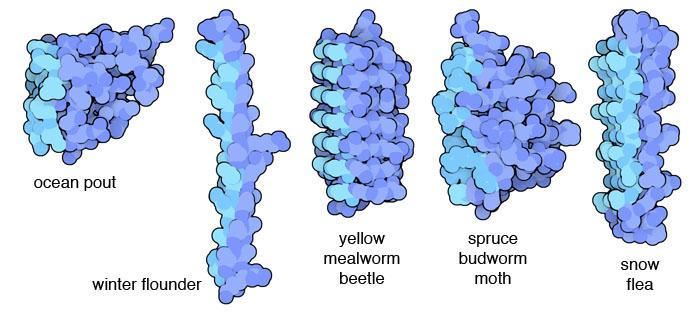
Some organisms thrive in conditions that should freeze them solid. Polar fish, freeze-tolerant insects, certain fungi and bacteria all manage ice through proteins that bind to ice crystals, suppress growth, prevent recrystallization, and reshape the ice itself. These are nature's antifreeze proteins. They've been used at small commercial scale for decades (ice cream texture, cell cryopreservation) but the breadth of the natural toolkit has been largely untapped.
Through DARPA's ICE (Ice Control for cold Environments) program, Bolt partnered with Ginkgo Bioworks to do that engineering at scale. Ginkgo screened and optimized libraries of natural and designed ice-modulating proteins. Bolt took promising candidates and pushed them toward product: formulation chemistry, stress-testing under operational conditions, and the application development work that decided whether a molecule was a paper or a thing that worked under real conditions.
DARPA's interest was extreme-environment defense applications. The commercial reach extended further: cryopreservation of cells and tissues, cold-chain logistics for biologics, novel frozen foods, anti-icing coatings. The throughline was the same productization work I've spent fifteen years on: taking a recombinant protein from a paper into a thing that worked under real conditions, at real scale.